
How We Solve the Thermal Problem
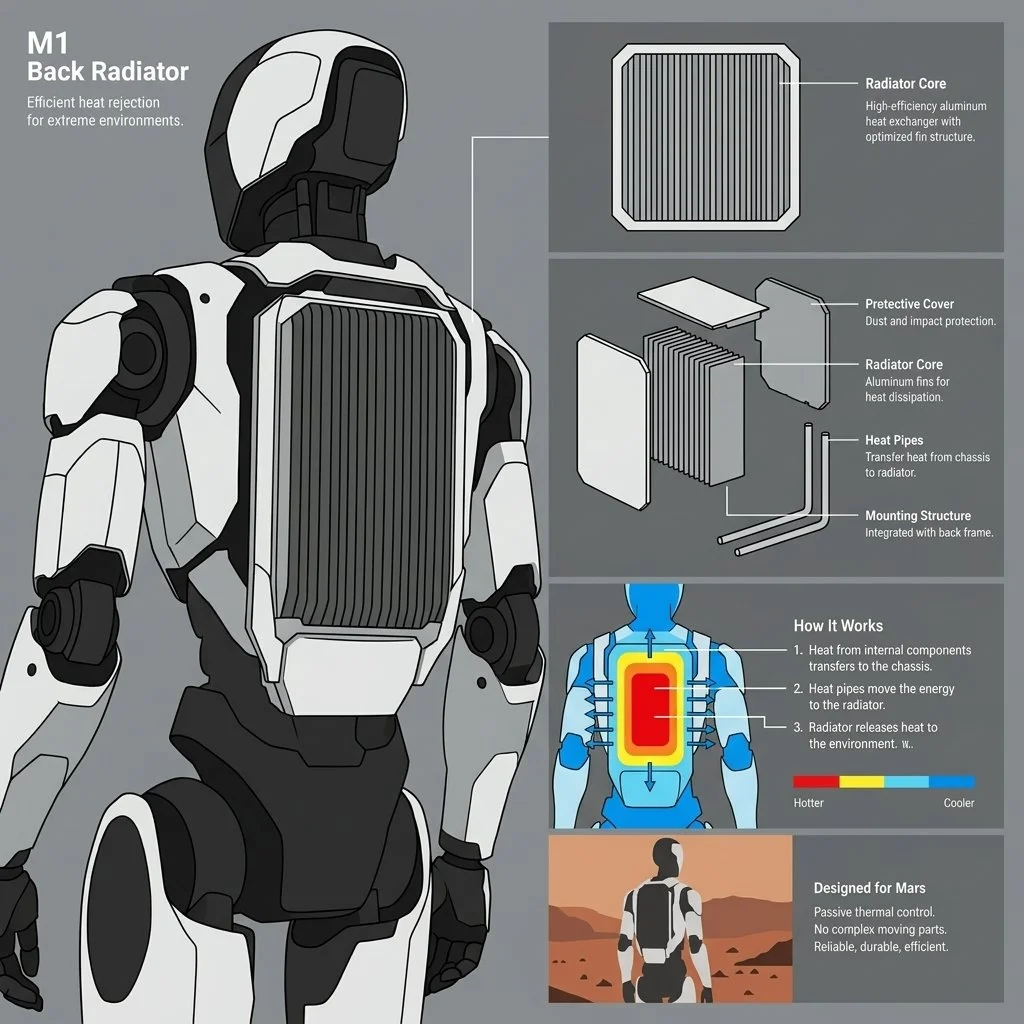
Thermal management is one of the most challenging problems in Mars robotics. Unlike on Earth, where a robot can reject heat through air convection, Mars has an extremely thin atmosphere, making convection far less effective.
M1 uses its aluminum-alloy chassis as a passive thermal path. Plug a radiator into M1’s back, conduct the heat to the radiator, and let it radiate safely into space—without an internal fan, much like a MacBook air.
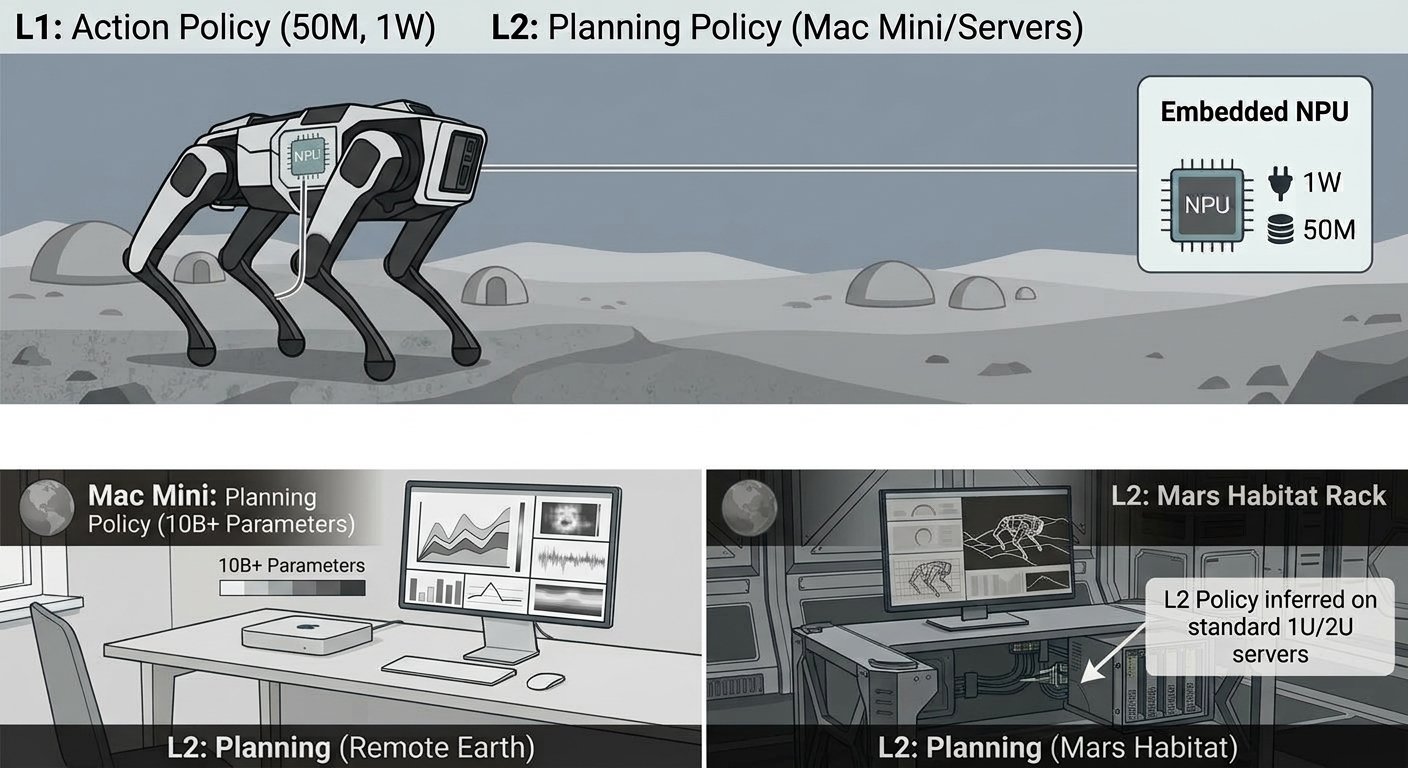
A Layer 1 + 2 architecture designed to reduce heat at the source.
An on-robot chip converts almost all of the power it consumes into heat. So we split a robot’s intelligence like the human body: a tiny, 1-watt L1 “Reflex” model runs on the robot for fast physical control, while a powerful L2 “Brain” model on a nearby server handles complex reasoning and planning.
Less compute on the robot. Less heat. More efficient intelligence.